













Mildred Valve Inspection, Replacement Advice & Current Alternatives
A Mildred valve is not there to make the hot water system run better. It is there to help stop a leak from becoming a flooded cupboard, damaged floor, ruined ceiling below or major strata claim. The sensor sits in the safety tray and the valve is installed on the cold-water supply to the heater.
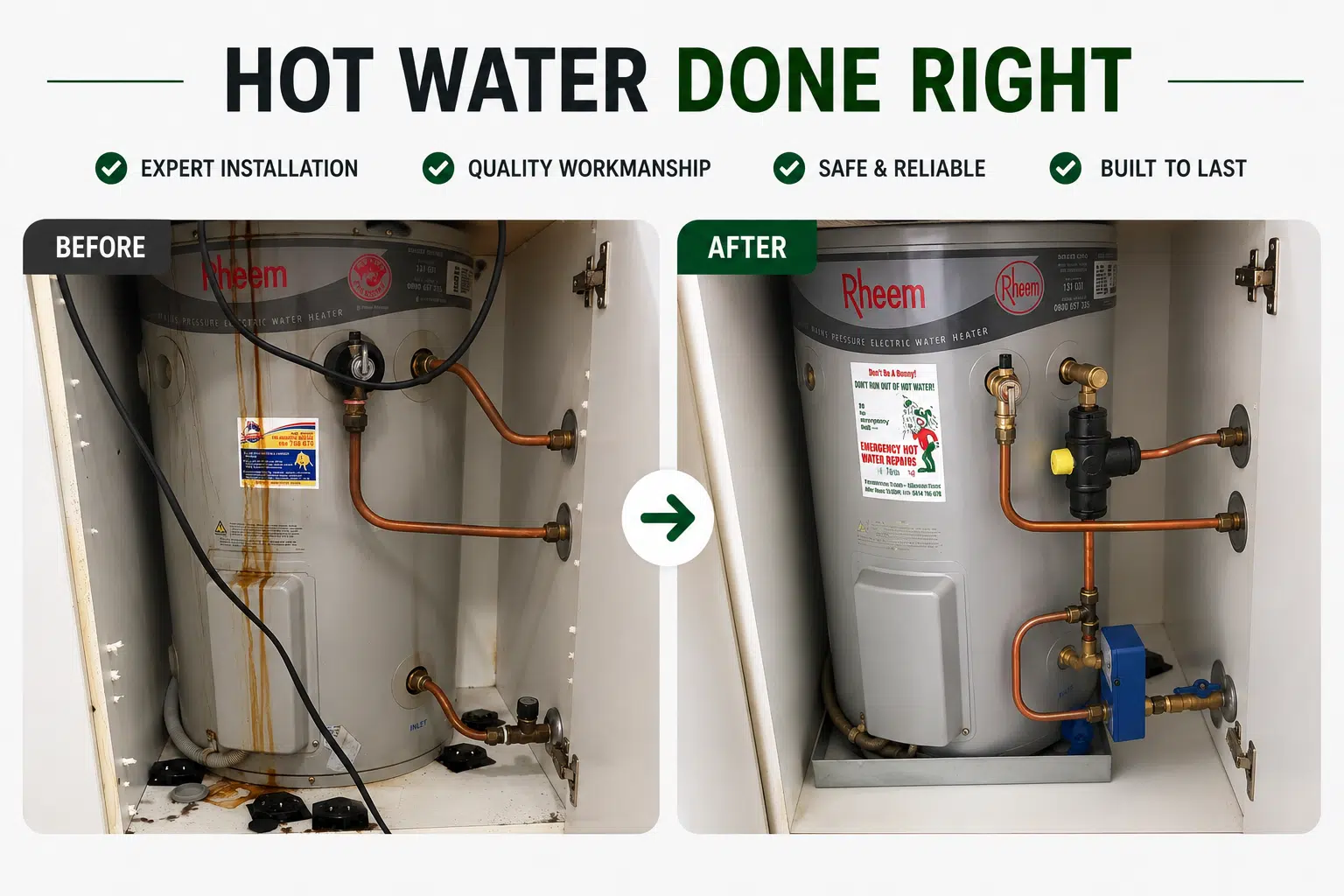
What a Mildred-style valve actually does
It does not stop a hot water tank from failing. It detects water in the safety tray and shuts the cold mains supply feeding the heater, helping stop the leak from being continuously replenished.
Water enters the safety tray
A leak from the cylinder, valve or nearby connection drips or flows into the tray beneath the indoor hot water system.
The sensor detects the water
The tray sensor is activated. Depending on the product, an audible alarm and visual warning may also tell the occupant that the device has tripped.
The cold-water supply closes
The automatic valve shuts the inlet feeding the heater, helping prevent the mains supply from continuously replenishing the leak.
The cylinder may still contain a full tank of water when the valve closes. Some of that stored water can still escape if the tank has ruptured. The device reduces ongoing water supply to the failure, but the heater still needs urgent inspection, repair or replacement.
The Leak-Protection Devices We Use

Mildred Automatic Shut-Off Valve
A sensor sits in the safety tray and instantly shuts off the water supply the moment a leak is detected.
- Detects water in the tray & cuts supply
- Battery operated (4× AAA/AA), with a low-battery alarm
- Annual battery replacement
- Complies with AS/NZS 3500.4:2018 & WMTS-476:2016

AVG eFlow Stop Valve
A motorised stop valve fitted to the cold-water inlet that closes automatically when its sensor detects a leak — protecting the system upstream of the expansion control valve.
- Automatic motorised shut-off on leak detection
- Fitted adjacent to the cold-water inlet
- Reliable mains-pressure protection
- Meets Australian plumbing standards

Tomson Leak-Detection Valve
A leak-detection valve that monitors the safety tray and isolates the water supply the instant moisture is sensed, preventing overflow and water damage.
- Continuous tray leak monitoring
- Automatic supply isolation on detection
- Ideal where a safe-waste drain is not possible
- Compliant leak-protection solution
The real reason these devices are installed
Compliance matters, but it is not the reason most owners care. They care because water can travel under floors, through cabinetry and into the property below long before anyone notices the heater has started leaking.
Mains water can keep feeding the leak
A failed tank or fitting may continue receiving cold water. Without isolation, the leak can keep going instead of being limited to the water already inside the cylinder.
The damage rarely stays beside the heater
Water can reach timber flooring, carpet, skirting, plasterboard, cabinets, electrical equipment and the ceiling of the apartment below.
Leaks do not wait for someone to be home
Many failures happen overnight, during work hours or while a property is vacant. Automatic isolation can act before anyone reaches the manual stop tap.
A tray is not an unlimited bucket
A safety tray catches and directs leakage, but it has limited capacity. It needs a suitable drain arrangement or a device that limits continued water entering the heater.
Advice for the three situations we see most often
The correct next step depends on whether the device has already tripped, the hot water system is being replaced or leak protection is being added to an existing installation.
My Mildred valve is beeping or has shut off the water
Look for water in the tray without disturbing the heater or electrical components. If water is present, do not repeatedly reset the valve. A leak must be found before normal operation is restored.
Call for fault advice →I am replacing an indoor hot water system
The old tray or shut-off valve should not automatically be reused. We assess the new heater, access, tray, drain, valve position, discharge lines and the condition of all existing components.
View installation service →My indoor heater has no visible leak protection
Older installations vary. We can inspect the property and explain whether a drained tray, automatic shut-off device, relocation or another practical upgrade is appropriate for the current setup.
Book an inspection →
Choosing the right replacement for an older Mildred setup
The original Mildred product became so familiar that many owners now use “Mildred valve” as a general name for tray-sensor shut-off protection. The important part is not matching the old badge. It is choosing a current approved arrangement that suits the heater, tray, drainage and available access.
We do not promise one universal replacement. We inspect the complete installation, confirm the required valve size and location, test or assess the existing tray and sensor, and then recommend a suitable current option.
Sometimes that is a replacement automatic valve. In other properties the safer answer may be a properly drained tray, a revised waste arrangement, relocation of the heater or correction of other non-compliant pipework. The solution should address the actual risk, not simply replace one box with another.
Leak protection matters most where escaping water has nowhere harmless to go
The financial risk is often driven by the building, not the price of the heater. A small tank in the wrong location can cause far more damage than a large tank outside.
Apartments and strata buildings
Water can pass through floors, walls and service penetrations into common property or the unit below.
Kitchen and laundry cupboards
Cabinetry hides early leaks and can swell, delaminate or trap moisture before the problem is visible.
Roof spaces and concealed areas
A leak may damage ceilings, insulation and electrical services before water appears in the occupied room.
Investment and vacant properties
Automatic isolation is valuable where nobody may notice a leak for hours or days.
We inspect the entire safety arrangement, not only the valve
A functioning sensor is useful only when the tray, valve position, pipework, drainage and heater are also suitable.
Hot water specialists who understand the heater and the building around it
Indoor replacements are rarely only about disconnecting one tank and connecting another. We plan around access, cabinetry, drainage, valves, lifting, discharge lines and the risk to surrounding property.
Need a hot water and leak-protection quote?
Tell us whether the valve is beeping, the heater is leaking or the entire indoor system needs replacement. Photos of the full installation help us prepare a realistic scope before the job begins.
Mildred valves, safety trays and leak protection
These answers cover the questions we receive from homeowners, strata managers and property managers when an indoor heater or shut-off valve needs attention.
What is a Mildred valve?
A Mildred valve is a leak-detection safety device fitted to indoor hot water systems. A sensor sits in the safety tray beneath the heater and, the moment it detects water, shuts off the cold-water supply feeding the tank — helping limit damage from a leaking cylinder or fitting. It detects leaks; it does not stop the tank itself from failing. "Mildred valve" is now often used as a general name for any tray-sensor shut-off device.
Why is my Mildred valve beeping?
Most Mildred-style valves include a low-battery alarm, so a regular beep usually means the battery needs replacing. If the beeping comes with no hot water or water sitting in the safety tray, the sensor may have detected a leak and shut off the supply — in that case, don't keep resetting it; the leak should be found first. Call 02 9344 6602 for fault advice.
Can I simply press reset and turn the water back on?
Only after confirming why the device tripped. Resetting it while water remains in the tray may restart the cold-water supply feeding an active leak. If the tray is dry, the cause may be a low battery, damp sensor or device fault, but the installed model still needs to be checked and tested correctly.
Can leak protection be added to an existing indoor hot water system?
Often it can, but the heater location, tray size, access, inlet pipework, drainage and available power or battery arrangement must first be assessed. In some installations, correcting the tray or waste arrangement is more important than fitting a valve by itself.
Do automatic leak-protection valves need electricity or batteries?
It depends on the product. Some older devices are battery operated, while other systems use a powered controller and motorised valve. The power source, alarm function and maintenance requirements should be confirmed for the exact model installed.
How often should a leak-protection valve be tested?
Testing and battery requirements vary by product. Follow the current manufacturer instructions for the installed model. Battery-powered devices generally need regular testing and scheduled battery replacement rather than waiting for a low-battery warning.
What photos should I send before booking?
Send a full photo of the hot water system, the tray beneath it, the valve and pipework, the surrounding cupboard or room, any visible water and the heater data plate. Wide photos are useful because access and drainage often determine the practical solution.
Have an existing Mildred valve or an indoor hot water system that needs replacement?
Call us or book online. Tell us what the valve is doing and send photos of the heater, tray, pipework and surrounding area so we can understand the installation before attendance.